
09 Oct Toronto’s First Community-Organized Pedestrian Summit: What We Heard
Read the Engagement Summary
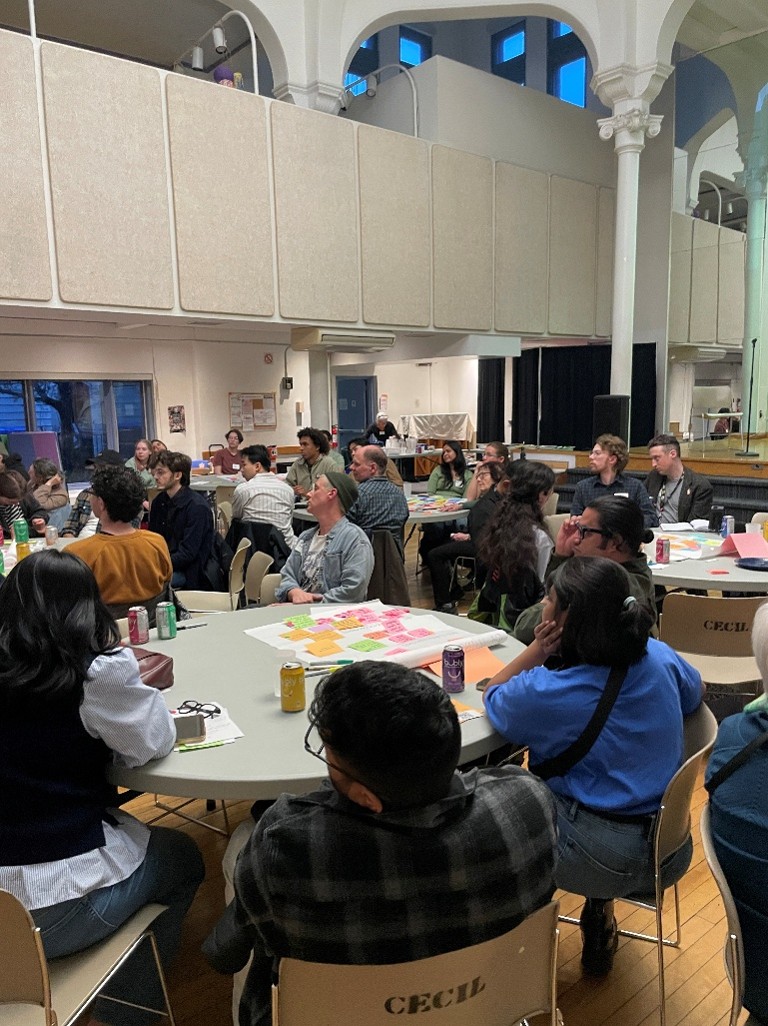
More than 100 advocates, residents, community leaders, and organizations came together this spring with a shared goal: making Toronto a better city for people on foot. The conversations revealed not only the challenges facing pedestrians today, but also a collective vision for a safer, healthier, and more connected city.
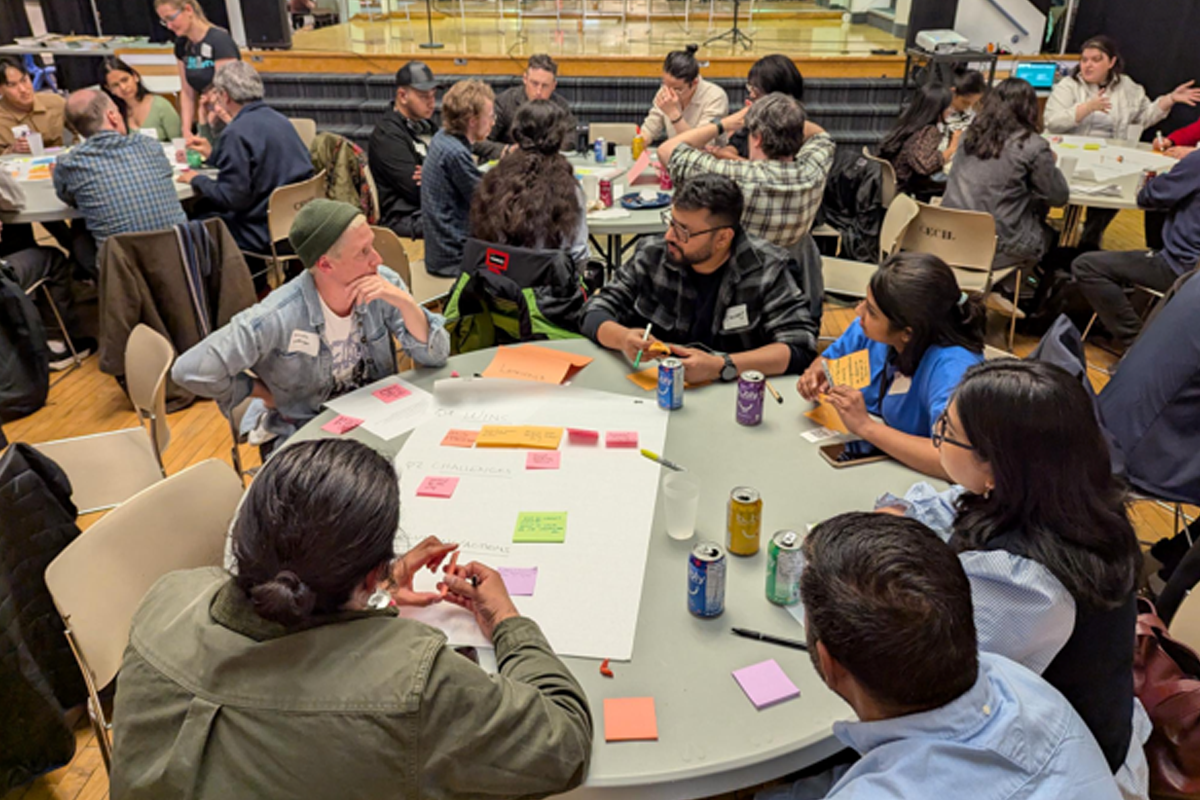
Participants sharing their ideas and vision for a safer Toronto.
On May 3, 2026, a coalition of organizations, including 8 80 Cities, Walk Toronto, Cycle Toronto, Friends and Families for Safe Streets (FFSS), Jane’s Walk, Walk Toronto, TTC Riders, Strong Towns Toronto, Toronto Climate Action Network, Green Neighbours Network (GNN), and Toronto Environmental Alliance (TEA) hosted Toronto’s first community-organized Pedestrian Summit.
The summit was designed to strengthen connections among advocates and organizations, gather community-driven ideas for pedestrian advocacy, and build momentum for future action.
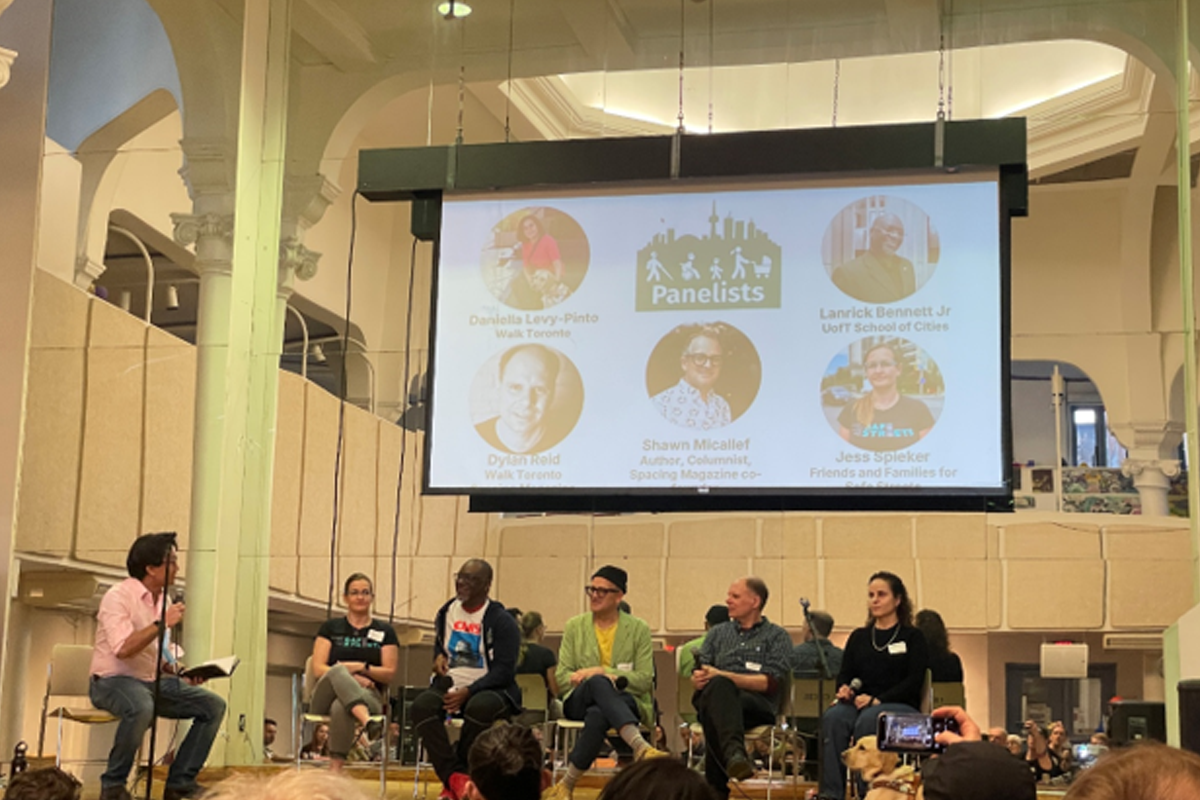
Left to right: How-Sen Chong, Jessie Speiker, Lanrrick Bennett Jr., Shawn Micallef, Dylan Reid and Daniella Levy Pinto
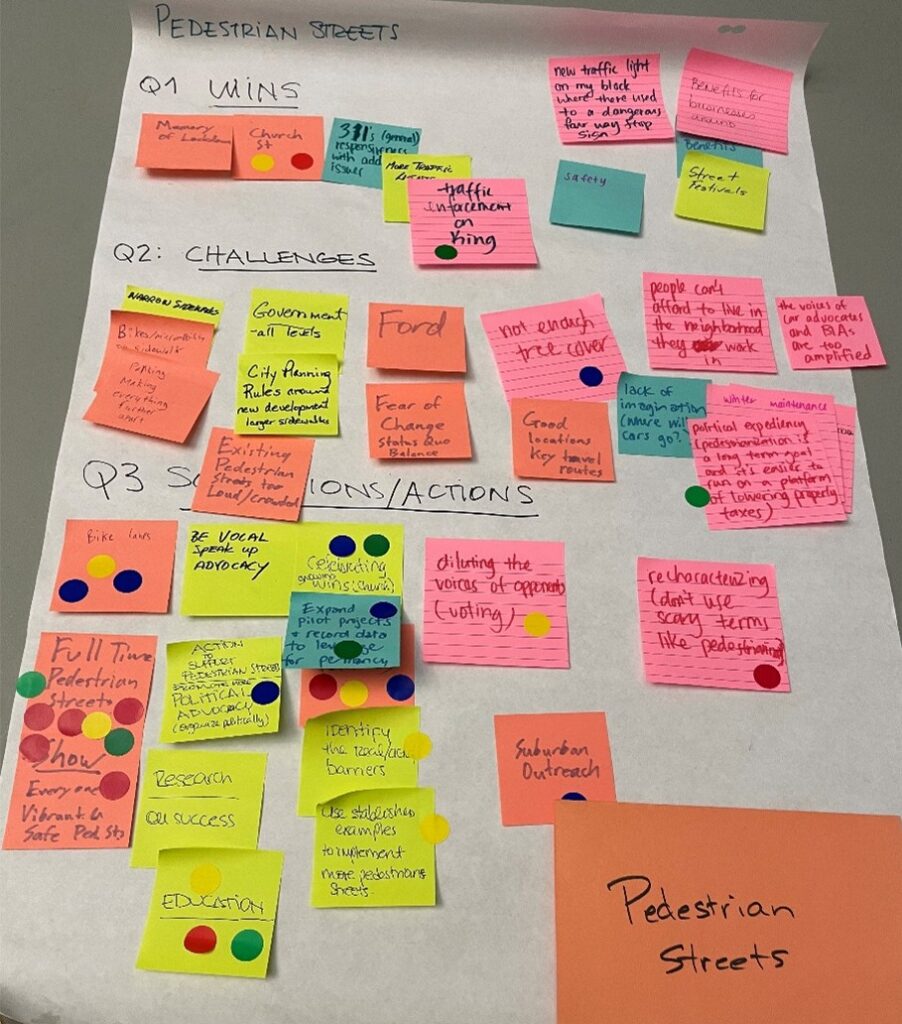
Following an opening panel featuring advocates, researchers, journalists, and accessibility champions, participants joined facilitated discussions exploring ten themes ranging from Vision Zero and pedestrian streets to housing, transit, climate, and public realm improvements. Together, attendees generated an impressive 366 unique ideas.
 A Clear Shared Vision
Despite discussing a wide range of topics, participants consistently returned to a common message: Toronto needs to be more ambitious in prioritizing people over cars. Residents expressed strong support for expanding pedestrian-only streets, improving accessibility, creating safer intersections, investing in Vision Zero initiatives, and transforming public spaces into places where people want to spend time.
Among the strongest themes was the desire for a more robust pedestrian streets program. Participants called for temporary, seasonal, and permanent pedestrianized streets supported by new policies, funding mechanisms, and partnerships with residents, businesses, and community organizations. Many highlighted existing successes, including the Church Street pilot and Toronto’s popular street festivals, as proof that people-centred streets can thrive.
Safety Is the Most Important Priority
Participants repeatedly emphasized the need for safer streets and intersections. From eliminating right turns on red to expanding pedestrian scrambles and reducing speed limits on residential streets, attendees urged the City to accelerate Vision Zero implementation and adopt a more systematic approach to traffic safety.
While significant progress has been made through lower speed limits, protected cycling infrastructure, traffic calming measures, and leading pedestrian intervals, many participants felt implementation remains too slow and inconsistent across neighbourhoods. Participants raised concerns about political will, provincial intervention, and inequitable investment in infrastructure throughout the discussions.
Accessibility, Accessibility, Accessibility
A recurring message throughout the summit was that a truly walkable city must work for people of all ages and abilities. Participants identified barriers such as missing sidewalks, inadequate crossing times, limited public washrooms, insufficient seating, and poor accessibility in parts of the pedestrian network.
Attendees called for greater investment in accessibility improvements and stronger advocacy for pedestrian issues. One of the highest-ranked recommendations was for elected officials to experience the city alongside people with disabilities to better understand the challenges many residents face every day.
The Connection: Walking, Transit, Housing and Climate
The conversations made it clear that walkability cannot be considered in isolation. Attendees highlighted the relationship between walking, public transit, housing affordability, and climate action. Participants noted that every transit rider is also a pedestrian and stressed the need for safer, more comfortable pathways to transit stops and stations. Participants identified dedicated streetcar platforms, improved shelters, better seating, and expanded bus-priority lanes as key priorities.
Discussions also explored how land-use planning influences walkability. Participants pointed to recent policy successes such as eliminating parking minimums, allowing multiplexes, and advancing transit-oriented development, while calling for more ambitious zoning reform, mixed-use neighbourhoods, and housing options that reduce dependence on automobiles.
Climate-focused discussions reinforced the need to rethink streets as public assets that support sustainable transportation, tree canopy growth, and healthier communities. Advocates highlighted school streets, bus-priority corridors, congestion pricing, and safer cycling infrastructure as key tools to reduce emissions while improving quality of life.
Investing in Public Life
Beyond infrastructure, participants emphasized the importance of creating places where people want to gather, connect, and spend time. Participants consistently identified more shade, public washrooms, seating, lighting, and well-maintained public spaces as essential ingredients of a vibrant, pedestrian-friendly city.
Attendees also recognized Toronto’s existing successes, including Open Streets initiatives, ActiveTO, School Streets, pedestrianization pilots, Biidaasige Park, and improvements to cycling and transit infrastructure. These examples demonstrate that meaningful change is possible when communities, advocates, and decision-makers work together toward a shared vision.
Looking Ahead
The summit concluded with organizers committing to continue collaborating, share resources with participants, and establish the Pedestrian Summit as an annual gathering for advocates, residents, and organizations working to make Toronto more walkable. Participants agreed that while Toronto has many of the ingredients of a great walking city, realizing its full potential will require bold leadership, sustained investment, and a shared commitment to putting people first.
The ideas generated at the summit are more than recommendations. They are a blueprint for action. From safer intersections and accessible sidewalks to pedestrianized streets, better transit connections, and vibrant public spaces, Torontonians made it clear that they want a city designed around people, not traffic.
“Every city should have a law of two words: Pedestrians First” (Gil Penalosa)
The ideas generated at the summit are more than recommendations. They are a blueprint for action. From safer intersections and accessible sidewalks to pedestrianized streets, better transit connections, and vibrant public spaces, Torontonians made it clear that they want a city designed around people, not traffic.
Read, download and share the Engagement Summary
What would make your neighbourhood more walkable? Share your ideas with us and join the growing network of residents and organizations working to create a Toronto that is safer, healthier, and more accessible for everyone.
Sign up to our newsletter, follow our socials to stay engaged, attend events, and find opportunities to take action.