
15 Jun An Interview with Gil Peñalosa, Founder & Chair, 8 80 Cities
In this conversation, part of the series 8 80 Cities – 20 Years of Creating Cities for All, Gil Peñalosa reflects on a lifetime dedicated to reimagining cities as places where everyone can thrive. From his early experiences in Bogotá to his global advocacy for people-centred urban design, Gil shares why he founded 8 80 Cities, what progress has been made over the past two decades, what challenges remain, and his hopeful vision for the future of urban life.
How/why did you become interested in cities?
I was born in Bogotá, the capital of Colombia. We were a middle-class family and, luckily, lived across from a public park, where I spent most of my time from ages 5 to 12, other than sleeping or at school. Close by were mountains I loved, and often, with my brothers and/or friends, I used to climb them and enjoy the city view. For many years, my father worked in the public sector, and my mother was a landscape gardener. When I was in my last years of high school, our father was appointed Under-Secretary General of the United Nations, responsible for organizing the world’s largest conference to date, Human Settlements, HABITAT, Vancouver 1976. He visited over 90% of the countries, inviting presidents and ministers to attend, and he often shared ‘the good, the bad, and the ugly’ with us upon his return, as well as the opportunities and possibilities of cities of all sizes. In his last year, I was at UNC Chapel Hill; my older brother Enrique was at Duke, very close; and often our father stopped by, and we had long conversations, mostly about the lack of equity and sustainability issues. All these experiences explain partly my interest in people and cities.

Why did you start 8 80 Cities?
I came to Canada for two years; then I fell in love with this beautiful country in general, and the Greater Toronto area in particular, so I decided to stay with my family. I wanted to contribute and to influence, and I felt a way to have a bigger voice would be through creating a nonprofit organization, and that’s how 8 80 Cities was born 20 years ago, initially as Walk & Bike for Life, and years later, we changed the name to 8 80 Cities as the team an I were always talking about how to make cities better for all people, from 8 to 80, from all backgrounds, cities that were inclusive. accessible and equitable too.
After 20 years, what are you most proud of? What do you feel is unfinished?
Without a doubt, the fact that ‘8 80 cities’ as a concept has gained acceptance by elected officials and communities around the world is a major achievement. Decision-makers have accepted that vulnerable people, regardless of age or other factors, should be a priority; it’s very important. It was generally accepted that cities were designed and built by adults, for adults, and that children and older people were often not the priority. What is unfinished? Over the past two decades, many cities have done good work on creating cities for children, and there are great community organizations and advisors in this group; there is still much to be implemented in most cities, especially to include the 0 to 4 year olds in this priority, but they are moving forward. On the other hand, the older, over-60, seem to be the forgotten segment of the population. Neighbourhoods and cities must make living older, healthier, happier, the easier choice; good intentions are not enough. This is where I feel the organization can do more, and where I personally want to place much effort over the next few years.
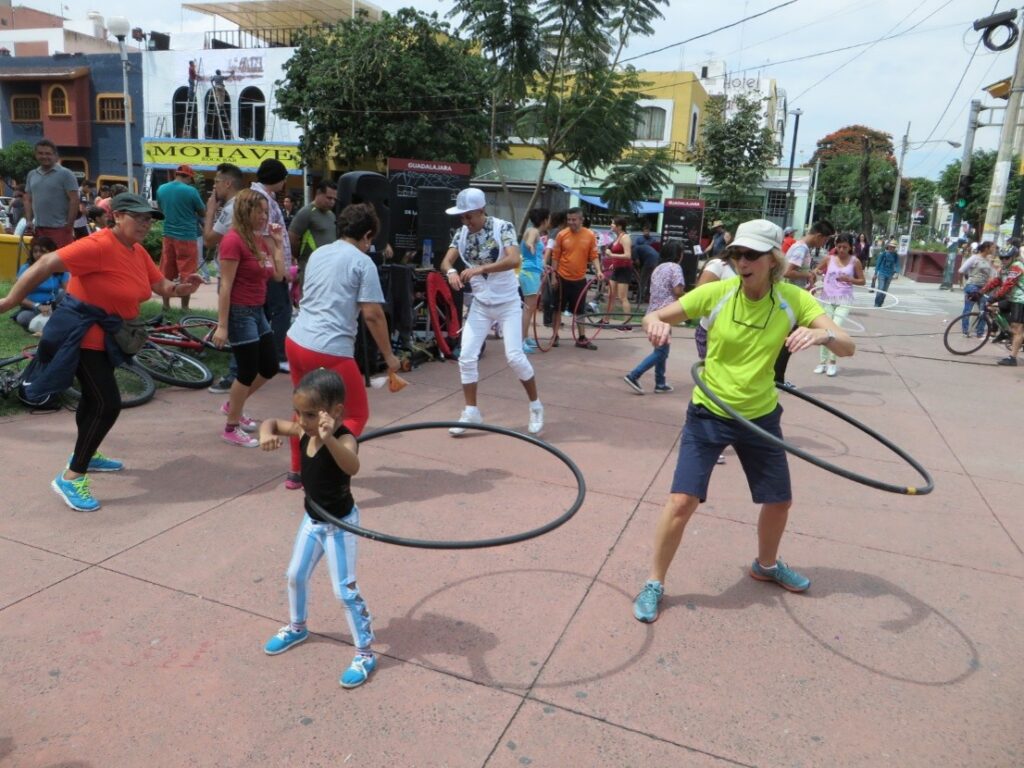
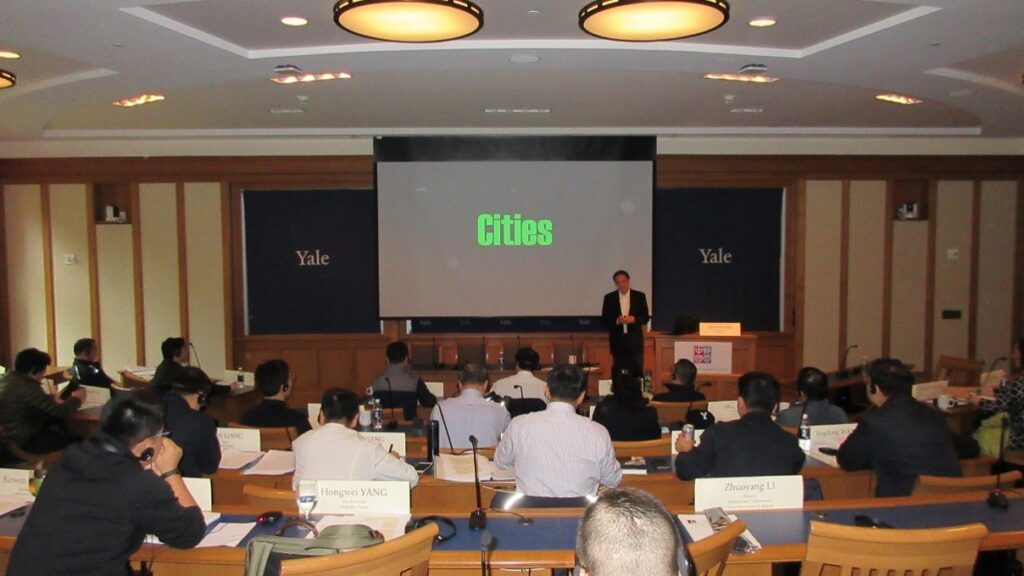
Study trip to Guadalajara with Robert Wood Johnson Foundation
In your view, what is currently the most pressing issue for cities?
Urgency. Population growth has stopped in much of the world and will eventually stop in all of it. Much more than designing and building cities, we are creating a way of life. Most of the urbanism done in the past 50+ years is not good for people, not good for mental, physical, or social health, not adequate for the environment, and poor for mobility; we need to plan cities in a radically different way: from design and construction to management. It’s a huge opportunity, and an enormous responsibility. Whatever we do, or don’t, is where millions, billions of people will live for centuries. We must do them as well as possible; no excuses.
Describe what an ideal future city looks and feels like to you?
An ideal city for me is one that is equitable, sustainable, and playful, where everyone can live a healthier, happier life.
Some confuse equity with equality. I don’t mind if some people earn more than others; some have bigger houses and spend vacations in exotic places. It might be good for society to have amazing people doing exceptional work to create value and provide better goods and services. Where I feel there should be equality, is in all that is public quantity and quality of parks, sidewalks, trees, public libraries, schools, safety, etc.
Rich and poor, young and old, everyone should have a real possibility to develop their dreams. Cities would make living older, healthier, and happier the easier choice, allowing people of all ages and backgrounds to live better.